Gangnam OLLIUM Clinic - Designed with Data, Completed by Hand
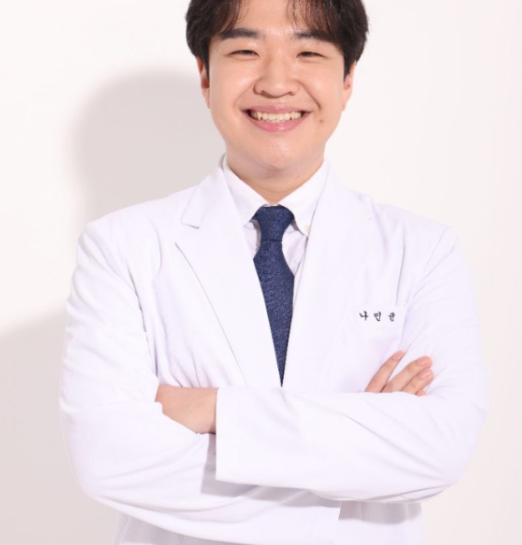
Hello, I'm Na Minkyun, Director of Gangnam OLLIUM Clinic.
"Doctor, what should I start with?"
"What procedure would suit me best?"
These are questions I hear all the time.
Not just in the consultation room — nine out of ten people who find out I practice dermatology ask me this.
"Get this done and you'll look great."
That's a sentence I could say in one line.
But I never say it.
Most people who come to a dermatology clinic have already had procedures done somewhere else before.
Yet when I ask them the following, most can't answer.
"Why did you get that done?"
.....
"Because people said it was good."
"Because my friend saw results from it."
"Because during the consultation, they told me this was right for me."
What state was your face actually in at the time?
And why did it specifically have to be that procedure?
Very few people can actually answer that.
And this doesn't stop after just one time.
Since they don't know why they got something done, they also don't know what to get next.
So they end up relying again on "someone said it was good."
I never thought this was a problem with the procedures themselves.
I saw it as a problem of explanation.
You're spending a significant amount of money and having a procedure done on your precious face — and you don't even know why you're doing it?
In the end, all that's left is anxiety.
So I changed the order
When preparing to open OLLIUM Clinic, the first thing I decided wasn't the interior design or the equipment.
It was:
what will I base my explanations to patients on?
It's a bit embarrassing to admit, but for a long time I too relied only on looking with my eyes and explaining with my words.
Of course... a doctor's eye is a trained eye.
With enough experience, you develop an eye that can diagnose after seeing and treating many patients.
But to be honest, since I too am human...
subtle facial contour asymmetries,
small differences in volume between the two sides,
imbalances in facial lines, and so on
there were moments I found hard to describe with certainty, even after seeing them with my own eyes.
Every time that happened, I felt genuinely frustrated.
I disliked feeling my own limitations, and I blamed myself for not being able to help patients get the best possible treatment.
So I prepared something.
OLLIUM Clinic's 3D AI diagnostic program
[ RE:MUSE ]
The reason I created RE:MUSE is simple.
To give my explanations more solid grounding
and to tell each patient the procedure that's truly right for them.
A clinic that knows your skin better than anyone
"Each area is in a different condition."
"Since the two sides differ, it needs to be customized."
I've said things like this to patients many times over the years.
But honestly, it probably never quite landed.
It's an obvious enough statement, but... there was no way to actually show and clearly explain "how" it differs.
But with RE:MUSE? Now it's possible.
Left-right symmetry and angles,
volume of skin by region,
distribution and severity of wrinkles and blemishes,
a comparison score against the average for your age group
it points out, in numbers, everything that can be analyzed about your face and skin.
And it doesn't stop there.
It also recommends which procedures are needed, and how much, based on priority.
Unfortunately, aging doesn't show up in just one part of the face.
Both cheeks look dull and dry, while the nose has excess sebum
pores are prominent around the nasolabial "butterfly zone";
the under-eyes, nasolabial folds, and side cheeks are starting to hollow
and the skin keeps sagging, blurring the jawline...
Can all of this be solved at once?
Realistically, that's difficult.
Because neither time nor budget is unlimited.
That's why I believe "priority" matters.
First deciding which area of your face needs attention most urgently right now,
and then recommending the right procedure for it based on evidence — that's exactly what RE:MUSE does.
Not simplistic, one-dimensional recommendations like
"cheek hollowing = filler"
"sagging skin = Ultherapy,"
but rather guidance on
what procedure you need most right now,
what you might consider getting later,
and how to maintain and manage your skin
which is why I believe it can serve as your own personalized care guideline.
In the end, it's still a person who performs the procedure
Reading this far, you might think
"So then, do I just do
whatever the machine tells me to?"
No.
What RE:MUSE tells us is something like:
"The left cheek is more hollowed than the right,
and the angle of the left jawline is more open."
To put it as an analogy, it plays the role of drawing up a blueprint before building a house.
But having a blueprint alone doesn't mean the house is built.
Even with the same amount of material, you need to know which layer and in which direction it should go,
and to know exactly where to add and where to leave empty in order to correct even a single degree of angle
that requires a skilled technician.
So I don't think RE:MUSE makes things easier or more comfortable for me.
If anything, it's the opposite.
Because the numbers remain on record, there's no room left for excuses.
But what it definitely does is help make my hands more precise.
Lastly
I can't decide what kind of face you want to live with.
Nor should I.
What OLLIUM Clinic can do for you comes down to two things:
showing you, with evidence, how far you are from that face
and closing that distance.
I won't practice medicine that begins and ends with "feeling."
Instead, I will design with data, and complete the result with my own hands.
This has been Na Minkyun, Director of Gangnam OLLIUM Clinic.
Read More