MEDICAL COLUMN
Medical Insights Written by Our Doctors
-
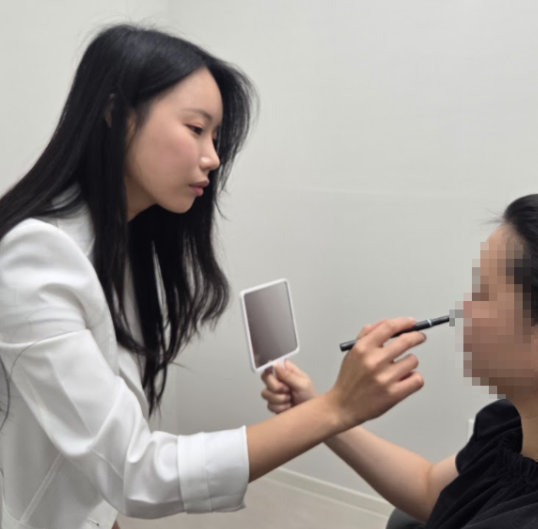 Gangnam Station Dermatology Fillers — Why I Decided to Share My Know-HowHello. I'm Lee Jinyeong, Director of Gangnam OLLIUM Clinic. I genuinely love fillers. It wouldn't be an exaggeration to say fillers are the procedure I've performed the most throughout my career. But throughout my time practicing medicine, most of the people who came to me for filler treatments were people who had already had filler done before. They weren't satisfied with the result they got, so they went looking for a different clinic. Every time I saw patients like this, I genuinely felt for them. Once a filler procedure goes wrong, it's difficult to restore things to how they were before and in the end, it usually just means wasted time and money. A place with lots of reviews, a place running lots of promotions, a place with low prices... All of those are fine. But if it were me, I'd absolutely add two more criteria on top of those. It contains my own personal views and know-how, so it wasn't an easy decision to share it publicly... but for the public good, so that you all can make even slightly better choices, I'll be honest with you here. Why fillers end up looking bad "I got filler and I think it turned out badly!" The reason is actually very simple. It's because the filler was injected without sufficiently considering the structure and characteristics of that person's face. Take the forehead as an example — there's more than just one or two things to consider during the design process. Width, height, hairline, the location and degree of curvature, the angle at which the forehead slopes back, and so on these fundamental structural characteristics vary enormously from person to person. And depending on these, the design direction has to change accordingly, which inevitably means the result changes too. If someone's face is on the larger or wider side, making the central forehead area more convex helps draw the eye toward the center. For people with a long face, filling in both sides and the temples sufficiently helps keep the eye from being drawn upward. Conversely, for a narrower forehead, filling in all the way to the hairline helps balance things out. But what if... someone simply has no ability to judge how to design around these kinds of shortcomings? Then everyone ends up getting the exact same forehead shape. And in the end, all that's left are regrets like "My temples look even more sunken now" "My face looks way too big.." "My nose bridge looks lower than before" I used the forehead as an example, but the same applies to lips, under-eyes, nasolabial folds, side cheeks, and so on. If injections are done blindly, without analyzing the facial proportions and bone structure together, what happens? A "duck lip" look, puffiness under the eyes, a "monkey face" look, an overall enlarged-looking face, and so on the unfortunate outcomes you've seen in so many negative reviews end up happening. Of course... this kind of design sense can't be fully learned from textbooks alone. It's an area where your eye only gradually develops through repeatedly examining and analyzing many, many patients' faces in person. (A doctor's natural aesthetic sense also plays a big role!) In other words, the first condition I'd point to for a clinic that's genuinely good at fillers is medical staff capable of judging what kind of design each individual patient actually needs. ^^ Differences at the 0.01 level Honestly, let me confess something here I wasn't amazing at fillers from the very start either ^^; Back when I was working as a staff physician, I attended a huge number of related training sessions. Going to conferences and observation sessions, I carefully studied and learned exactly which area of the lips needed what method and what dosage of injection. I also practiced extensively on my own face. But — as you probably know... theory and practice are different things, haha; A subtly awkward shape, volume not going exactly where intended, an overall sense that things just don't harmonize.. The area I found especially difficult was the lips. Lip filler is closer to delicate sculpting work, where the result can shift based on differences as small as 0.01cc in dosage or 0.01mm in placement. For example, let's say someone is getting 1cc of lip filler. Excluding the amount needed to lift the corners of the mouth, if you divide the lips into four sections top, bottom, and sideways that leaves about 0.2cc usable per section. To inject that amount while accounting for lip symmetry and proportion... the amount injected at any single point is genuinely tiny. (roughly 0.03cc) So no matter how well you understand the theory going into the procedure, if the fingertip pressure controlling the needle isn't controlled with extreme precision? An extra 0.01cc goes in, and suddenly it looks unnatural. That's why I practiced this countless times. I agonized over, injected, and controlled every movement so that not even a 0.01cc or 0.01mm margin of error would occur. There were times I got frustrated with hands that just wouldn't move the way I wanted, and felt plenty of my own frustration too ^^; But I think it's precisely because of that period that I'm now able to perform these procedures with genuine confidence, haha. Anyone can learn and study the theory. But turning that theory into "reality"? I believe that takes relentless effort. So what I hope you'll look for is medical staff with the skill to accurately translate their judged design into reality with their own hands. That's the second condition, as I see it ^^ So, these are the two conditions I believe define a clinic that's genuinely good at fillers: Know-how in filler design The skill to actually execute that know-how in practice That's what I wanted to share with you. Honestly, I hesitated a lot while writing this post. I worried people might misread it as "isn't this just a self-promotional post?" ^^; But seeing so many people who had already gone through one unsatisfying procedure and were left wandering from clinic to clinic, still unsatisfied... I kept thinking, "if only they had known these criteria beforehand..." and that's what finally pushed me to write this. It doesn't have to be OLLIUM Clinic. As long as you know what to look for and can find a clinic that meets those standards, that's more than enough ^^ I too will keep practicing and studying every day, so I never fall short of these standards myself. Thank you so much for reading all the way to the end. This has been Director Lee Jinyeong of Gangnam OLLIUM Clinic.
Read More
-
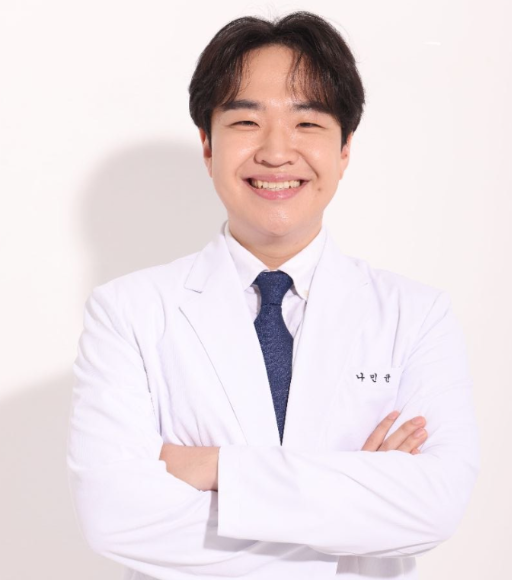 The Difference in Gangnam Dermatology Lifting Isn't the Equipment — It's the JudgmentHello, I'm Na Minkyun, Director of Gangnam OLLIUM Clinic. Most people considering a lifting procedure start by asking about the equipment. Is Ultherapy better, or is Thermage better... But even with the same device and the same number of shots, the results differ from person to person. That's because the device is just a tool — what actually produces the result is the judgment behind how and where that tool is used. And the accuracy of that judgment depends entirely on how precisely the face was assessed in the first place. So I believe lifting comes down to three stages How accurately was it assessed? Was the treatment plan designed based on that assessment? Can the result be proven? And rather than handling all three of these through words alone, I changed my approach to rely on numbers. Words alone can't show everything The degree of elasticity and sagging varies from person to person. And even within a single person's face, it varies by area. That's why carefully examining the face and planning the treatment approach is essential above all else. This is usually referred to as "1:1 personalized design" Up to this point, this probably all sounds very familiar. But that's exactly why many people still don't fully connect with it. Explanations like "the two sides are different" "it varies by area" tend to end up vague, and they don't really answer the question of "okay, but exactly how much, and where, is it different?" I'll admit, this was true for me too during consultations. While listening to a patient's concerns, examining their face, and working out the design, there were always certain subtle points that were awkward to explain clearly in words ^^; For example — one corner of the mouth being pulled up more than the other, one nasolabial fold being ever so slightly more sunken than the other, or the jaw muscles being similar in size on both sides, but one side looking slightly larger due to a difference in fat volume... These kinds of subtle differences were often things even the patient — who looks in the mirror every day would only notice with an "oh!" once I pointed them out haha. And since I too am, after all, only human... no matter how much time I spend examining a patient's face, I'm sure there are things I've missed. So I found myself wondering "Isn't there a way to examine these details even more thoroughly?" That question is exactly what led to the creation of OLLIUM's 3D AI skin diagnostic program, [ RE:MUSE ] Designed by numbers, not by instinct The reason RE:MUSE is needed is simple. Based on 3D imaging, the AI divides the face into regions and clearly shows the differences in volume distribution, expressing the asymmetry angle between the two sides of the face as actual numbers. In other words, instead of the kind of vague, approximate explanation I used to give patients before, like "Looking in the mirror, the left side seems a bit more saggy," I can now say something like "Looking at the lower jaw angle, there's a significant deviation between the two sides. The angle of each cheek is different, and you can see the right side is lower. To bring both sides into better symmetry, I'd focus around 50 additional shots on the right side, and it may also be worth considering balancing Botox at the corners of the mouth later on." making it possible to base judgments on confirmed data like this. In other words, patients can step a little further away from fears like "Does this doctor actually understand my face properly before treating it?" "I heard that if it's done wrong, it can cause side effects and make asymmetry worse..." because the basis is the doctor's "numbers," not just their "instinct" Proven by data, not by feeling What patients consider a "perfect result" usually means the face being lifted, the cheeks looking slimmer, and marionette lines becoming less visible in other words, visibly noticeable effects. And the best way to clearly feel these changes is through before-and-after photos. In fact, when looking at reviews, you've probably looked at the photos before reading the text. That's simply more intuitive. However, before-and-after photos do have clear limitations. Judging whether something has "improved" ultimately depends on the subjective perception of whoever is looking. Even lighting, angle, or a single facial expression on a given day can change the impression. Of course, this doesn't mean before-and-after photos are useless. It just means that explaining results with photos alone has clear limitations. That's why I compare data captured from the same angle, side by side, using actual numbers. Rather than a vague "feeling" like "It looks a bit slimmer?" "Does the unevenness seem a little better?" I believe a result can only be considered truly proven once it can be confirmed with numbers. What I believe is the essence of lifting comes down to "how accurately you assess, design, and prove it." Confirming differences in volume and sagging by area through numbers, not vague words. Designing a personalized treatment plan for each area based on that data. And proving the result through data as well, not just photos. I believe reliable lifting is only achieved once all three of these are in place. And I will continue looking for even better methods going forward, in pursuit of more precise treatment. Thank you for reading this long post. This has been Na Minkyun, Director of Gangnam OLLIUM Clinic.
Read More